ShopDreamUp AI ArtDreamUp
Deviation Actions



Suggested Deviants


Suggested Collections


You Might Like…


Featured in Groups




Description
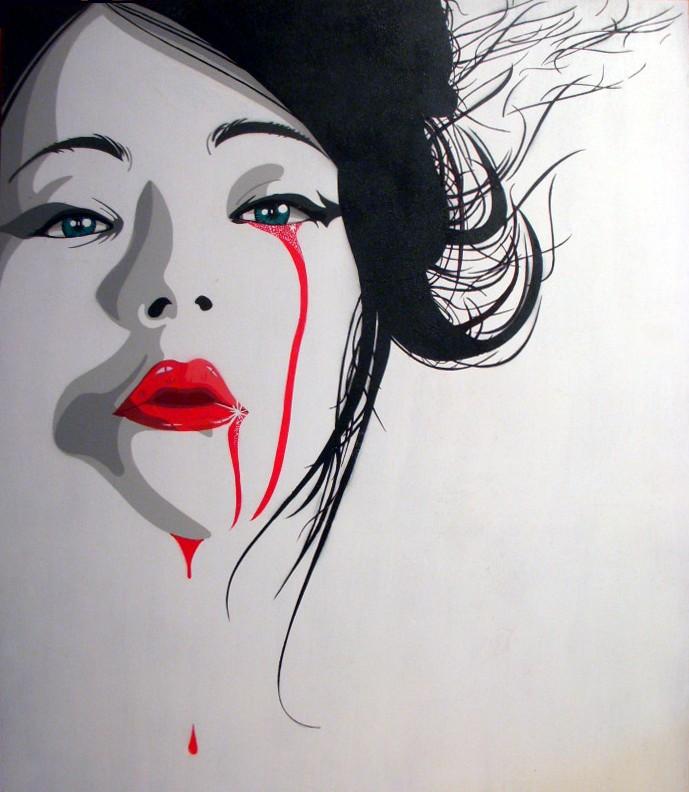
Stencil con installazione creato da Animus.
Il lavoro completo sarà visibile appena potrò installare dei fiori di ciliegio (maggio).
11 layers
13 colori:
•CLASH: Nero, Grigio Alcatraz, Grigio Milano, Grigio Cenere, Grigio Beretta, Bianco
•MTN94: Rojo Burdeos, Rojo Clandestino, Rojo Vivo, Rojo Sangre, Rojo Claro, Rojo fiebre, Verde Era.
146cm x 54cm x 40cm(katana) su legno mdf
Ringraziamento speciale a Vectta per la sua disponibilità.
Il Seppuku è un antichissimo rituale suicida appartenente alla cultura del Sollevante.
La traduzione letterale del termine Seppuku è "taglio dello stomaco": veniva eseguito, secondo una prassi rigidamente codificata, come espiazione di una colpa commessa o come mezzo per sfuggire ad una morte disonorevole per mano dei nemici.
Un elemento fondamentale per la comprensione di questo rituale è il seguente: si riteneva che lo stomaco fosse la sede dell'anima, e pertanto il significato simbolico era quello di mostrare agli astanti la propria anima priva di colpe, in tutta la sua purezza.
L'arma usata per questa pratica poteva essere il tantō (coltello), anche se più spesso, soprattutto sul campo di battaglia, la scelta ricadeva sul wakizashi, detto anche guardiano dell'onore, la seconda lama (più corta della katana) che era portata di diritto dai soli samurai.
Il suicida assumeva la classica posizione giapponese detta seiza, cioè in ginocchio con le punte dei piedi a far presa sul terreno; ciò aveva la funzione di evitare che, conclusosi il rituale, il corpo cadesse all’indietro: un’eventualità paragonabile ad una morte disonorevole.
Al momento fatidico il soggetto fendeva il proprio ventre con un taglio da sinistra verso destra e poi verso l'alto.
Sebbene il gesto del seppuku fosse un atto volontario e compiuto dal suicida, una figura fondamentale era quella del kaishakunin, il "decapitatore". Una volta eseguita l'incisione nell'addome, il kaishakunin decapitava il suicida con un colpo netto, per fare in modo che il dolore non sfigurasse il volto dell’amico. La decapitazione (kaishaku) richiedeva eccezionale abilità e infatti il kaishakunin era l'amico più abile nell’utilizzo della spada.
Proprio l'intervento del kaishakunin e la conseguente decapitazione costituiscono la differenza essenziale tra il Seppuku e il ben più noto Harakiri (rituale privo di questi elementi): differenza formale, ma non ignorabile, dal momento che in Giappone la forma è considerata tanto importante quanto la sostanza.
Questa pratica secolare fu celebrata, fra gli altri, dallo scrittore giapponese di fama internazionale Yukio Mishima nel non lontano 1970.
Con il nome di Jigai, il Seppuku era previsto, nella tradizione della casta dei samurai, anche per le donne; in questo caso, tuttavia, il taglio non avveniva al ventre bensì alla gola attraverso la recisione dell’arteria carotidea.
Il rito sacro del Seppuku è apparentemente considerabile un gesto colmo di follia o insensatezza. Per noi occidentali, in effetti, entrare nella forma mentis di un giapponese è un’operazione alquanto complessa, ancora più se l’argomento in questione è l’onore, di cui abbiamo una concezione totalmente differente. Ho volutamente realizzato il mio lavoro in modo tale da renderlo somigliante ad un rito Seppuku, sebbene fossi consapevole della contraddizione di fondo nel farlo praticare ad una donna (poiché come scritto sopra, una donna può solo compiere Jigai). Ciò per un semplice distacco dal paradigma sessista su cui, a mio personale avviso, si fonda la cultura giapponese.
_______________________________
Stencil with installation realized by Animus.
The finished work will be visible when I could install some cherry blossom in may.
11 layers
13 colors:
•CLASH: Nero, Grigio Alcatraz, Grigio Milano, Grigio Cenere, Grigio Beretta, Bianco
•MTN94: Rojo Burdeos, Rojo Clandestino, Rojo Vivo, Rojo Sangre, Rojo Claro, Rojo fiebre, Verde Era.
146cm x 54cm x 40cm(katana) on mdf
Special thanks to Vectta for his disponibility.
Seppuku is an ancient suicide ritual belonging to the Japanese culture.
The translation of the term Seppuku is “cutting of the stomach”: this ritual was used to expiate a wrong one has done or as a way to escape from a dishonourable death by enemies.
A very important element to understand this ritual is the following one: the Japanese believe that the stomach is the seat of the soul; so the symbolic meaning of this act was to give a proof to the bystanders of the purity of one’s soul.
The object used for this ritual could be the “tantō” (knife), but in the gratest part of the occasion, the choice fell to the “wakizashi”, also known as the guardian of the honor, the second blade (shorter than the katana) that only samurais could detain.
The suicide took on the classic Japanese position called seiza, that is on his knees with the toes to take hold on the ground, and this function was to avoid that, when the ritual was ended, the body fall backwards: a contingency comparable to a dishonourable death.
At the fateful moment the subject splitted through his stomach with a cutting from left toright and then upwards.
Although the act of seppuku was voluntary and done by suicide, an important figurewas that of “kaishakunin”, the "beheading”. When the incision on the abdomen was done, the kaishakunin beheaded the suicide with a shot to make that the pain does not disfigure the face of his friend. The beheading (kaishaku) required exceptional skill and in fact the kaishakunin was the more able friend in using the sword.
The action of kaishakunin constitute the essential difference between the more well known Harakiri (ritual devoid of these elements) and Seppuku: formal difference, but not ignorable, because in Japan, the form is considered as important as the substance.
This age-old practice was celebrated, among others, by the internationally renowned Japanese writer Yukio Mishima in 1970.
Under the name of “Jigai”, Seppuku was expected, in the tradition of the caste of the samurai, even for women; in this case, however, they didn’t cut the stomach but their throat severing the carotid artery.
The sacred ritual of Seppuku is apparently considerable a gestue filled with madnessor insanity. For us Westerners, in fact, enter into the mindset of a Japanese is extremely complex, even more if the topic in question is the honor. I purposely made my work so as to make it look like a rite of Seppuku, although I was aware of the basic contradiction of let it make by a woman (because, as noted above, a woman can only make Jigai). This is for a simple refuse of the sexist paradigm on which, in my personal opinion, is based in Japanese culture.
Il lavoro completo sarà visibile appena potrò installare dei fiori di ciliegio (maggio).
11 layers
13 colori:
•CLASH: Nero, Grigio Alcatraz, Grigio Milano, Grigio Cenere, Grigio Beretta, Bianco
•MTN94: Rojo Burdeos, Rojo Clandestino, Rojo Vivo, Rojo Sangre, Rojo Claro, Rojo fiebre, Verde Era.
146cm x 54cm x 40cm(katana) su legno mdf
Ringraziamento speciale a Vectta per la sua disponibilità.
Il Seppuku è un antichissimo rituale suicida appartenente alla cultura del Sollevante.
La traduzione letterale del termine Seppuku è "taglio dello stomaco": veniva eseguito, secondo una prassi rigidamente codificata, come espiazione di una colpa commessa o come mezzo per sfuggire ad una morte disonorevole per mano dei nemici.
Un elemento fondamentale per la comprensione di questo rituale è il seguente: si riteneva che lo stomaco fosse la sede dell'anima, e pertanto il significato simbolico era quello di mostrare agli astanti la propria anima priva di colpe, in tutta la sua purezza.
L'arma usata per questa pratica poteva essere il tantō (coltello), anche se più spesso, soprattutto sul campo di battaglia, la scelta ricadeva sul wakizashi, detto anche guardiano dell'onore, la seconda lama (più corta della katana) che era portata di diritto dai soli samurai.
Il suicida assumeva la classica posizione giapponese detta seiza, cioè in ginocchio con le punte dei piedi a far presa sul terreno; ciò aveva la funzione di evitare che, conclusosi il rituale, il corpo cadesse all’indietro: un’eventualità paragonabile ad una morte disonorevole.
Al momento fatidico il soggetto fendeva il proprio ventre con un taglio da sinistra verso destra e poi verso l'alto.
Sebbene il gesto del seppuku fosse un atto volontario e compiuto dal suicida, una figura fondamentale era quella del kaishakunin, il "decapitatore". Una volta eseguita l'incisione nell'addome, il kaishakunin decapitava il suicida con un colpo netto, per fare in modo che il dolore non sfigurasse il volto dell’amico. La decapitazione (kaishaku) richiedeva eccezionale abilità e infatti il kaishakunin era l'amico più abile nell’utilizzo della spada.
Proprio l'intervento del kaishakunin e la conseguente decapitazione costituiscono la differenza essenziale tra il Seppuku e il ben più noto Harakiri (rituale privo di questi elementi): differenza formale, ma non ignorabile, dal momento che in Giappone la forma è considerata tanto importante quanto la sostanza.
Questa pratica secolare fu celebrata, fra gli altri, dallo scrittore giapponese di fama internazionale Yukio Mishima nel non lontano 1970.
Con il nome di Jigai, il Seppuku era previsto, nella tradizione della casta dei samurai, anche per le donne; in questo caso, tuttavia, il taglio non avveniva al ventre bensì alla gola attraverso la recisione dell’arteria carotidea.
Il rito sacro del Seppuku è apparentemente considerabile un gesto colmo di follia o insensatezza. Per noi occidentali, in effetti, entrare nella forma mentis di un giapponese è un’operazione alquanto complessa, ancora più se l’argomento in questione è l’onore, di cui abbiamo una concezione totalmente differente. Ho volutamente realizzato il mio lavoro in modo tale da renderlo somigliante ad un rito Seppuku, sebbene fossi consapevole della contraddizione di fondo nel farlo praticare ad una donna (poiché come scritto sopra, una donna può solo compiere Jigai). Ciò per un semplice distacco dal paradigma sessista su cui, a mio personale avviso, si fonda la cultura giapponese.
_______________________________
Stencil with installation realized by Animus.
The finished work will be visible when I could install some cherry blossom in may.
11 layers
13 colors:
•CLASH: Nero, Grigio Alcatraz, Grigio Milano, Grigio Cenere, Grigio Beretta, Bianco
•MTN94: Rojo Burdeos, Rojo Clandestino, Rojo Vivo, Rojo Sangre, Rojo Claro, Rojo fiebre, Verde Era.
146cm x 54cm x 40cm(katana) on mdf
Special thanks to Vectta for his disponibility.
Seppuku is an ancient suicide ritual belonging to the Japanese culture.
The translation of the term Seppuku is “cutting of the stomach”: this ritual was used to expiate a wrong one has done or as a way to escape from a dishonourable death by enemies.
A very important element to understand this ritual is the following one: the Japanese believe that the stomach is the seat of the soul; so the symbolic meaning of this act was to give a proof to the bystanders of the purity of one’s soul.
The object used for this ritual could be the “tantō” (knife), but in the gratest part of the occasion, the choice fell to the “wakizashi”, also known as the guardian of the honor, the second blade (shorter than the katana) that only samurais could detain.
The suicide took on the classic Japanese position called seiza, that is on his knees with the toes to take hold on the ground, and this function was to avoid that, when the ritual was ended, the body fall backwards: a contingency comparable to a dishonourable death.
At the fateful moment the subject splitted through his stomach with a cutting from left toright and then upwards.
Although the act of seppuku was voluntary and done by suicide, an important figurewas that of “kaishakunin”, the "beheading”. When the incision on the abdomen was done, the kaishakunin beheaded the suicide with a shot to make that the pain does not disfigure the face of his friend. The beheading (kaishaku) required exceptional skill and in fact the kaishakunin was the more able friend in using the sword.
The action of kaishakunin constitute the essential difference between the more well known Harakiri (ritual devoid of these elements) and Seppuku: formal difference, but not ignorable, because in Japan, the form is considered as important as the substance.
This age-old practice was celebrated, among others, by the internationally renowned Japanese writer Yukio Mishima in 1970.
Under the name of “Jigai”, Seppuku was expected, in the tradition of the caste of the samurai, even for women; in this case, however, they didn’t cut the stomach but their throat severing the carotid artery.
The sacred ritual of Seppuku is apparently considerable a gestue filled with madnessor insanity. For us Westerners, in fact, enter into the mindset of a Japanese is extremely complex, even more if the topic in question is the honor. I purposely made my work so as to make it look like a rite of Seppuku, although I was aware of the basic contradiction of let it make by a woman (because, as noted above, a woman can only make Jigai). This is for a simple refuse of the sexist paradigm on which, in my personal opinion, is based in Japanese culture.
Image size
689x792px 56.17 KB
Make
NIKON
Model
COOLPIX S51
Shutter Speed
10/200 second
Aperture
F/3.3
Focal Length
6 mm
ISO Speed
200
Date Taken
Jan 21, 2011, 1:58:24 PM
© 2011 - 2024 Potsy89
Comments32
Join the community to add your comment. Already a deviant? Log In

Nice contrast between the shading and the crimson, also like how the gore in minimal and left for the mind to fathom